

Complex and high-risk angioplasty is an advanced form of Percutaneous Coronary Intervention (PCI) used to treat challenging coronary artery blockages that may require specialised techniques, advanced imaging and careful treatment planning.
Such procedures may be considered for patients with heavily calcified arteries, left-main disease, bifurcation lesions, multiple blockages, chronic total occlusions or significantly reduced heart function.
Senior Interventional Cardiologist specialising in complex coronary interventions and advanced high-risk PCI in Kanpur.
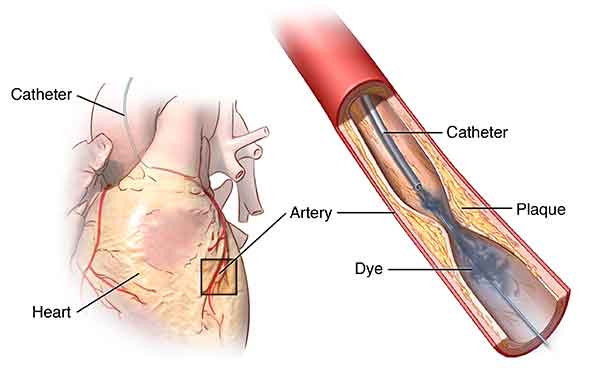
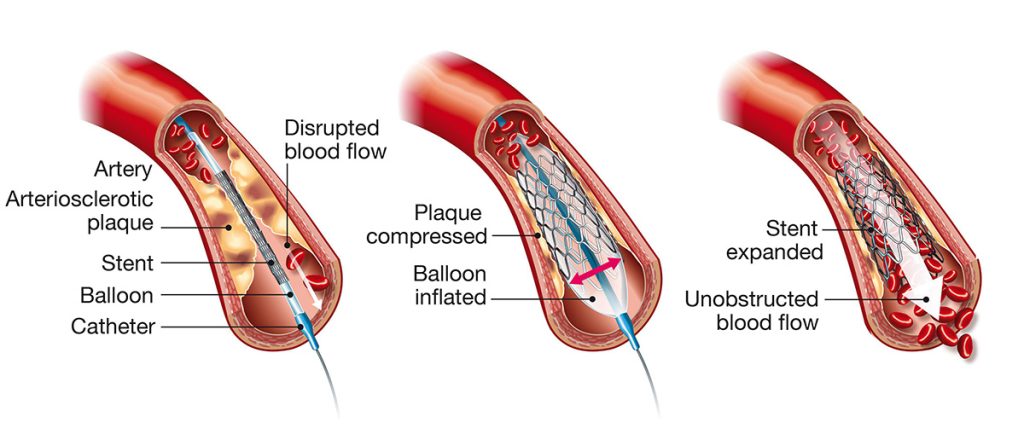
Complex angioplasty refers to coronary interventions involving technically challenging blockages or patients with conditions that may make the procedure more demanding.
These procedures require detailed assessment of the coronary arteries and careful planning. Depending on the patient's anatomy and clinical condition, advanced technologies such as IVUS, OCT and FFR may help guide treatment decisions and optimise the result.
In selected patients with heavily calcified arteries, specialised calcium-modification techniques such as rotational atherectomy or intravascular lithotripsy may be considered.
Complex PCI may be considered when coronary artery disease presents with challenging anatomy or when the patient's clinical condition makes conventional intervention more demanding.
Treatment of significant disease involving the left main coronary artery may require detailed planning and advanced PCI techniques.
Blockages located where a coronary artery divides into branches can require specialised treatment strategies.
Severe calcium within the artery may require specialised calcium-modification techniques before stent placement.
Selected patients with significantly reduced heart function may require careful high-risk PCI planning.
Patients with extensive or multiple coronary blockages may require a comprehensive intervention strategy.
Elderly patients and patients with significant medical conditions may require individualised high-risk intervention planning.
Advanced imaging and lesion-modification technologies may help the cardiologist assess coronary anatomy, select the appropriate treatment strategy and optimise stent placement.
Provides detailed information about the vessel and helps with lesion assessment and stent optimisation.
High-resolution intravascular imaging that can assist in detailed assessment of coronary lesions and stent results.
Helps assess the functional significance of selected coronary narrowings when clinically appropriate.
Uses sonic pressure waves to modify calcium in selected heavily calcified coronary lesions.
Depending on the patient's coronary anatomy and clinical condition, specialised techniques may be required to safely prepare the artery and achieve an optimal intervention.
Used in selected heavily calcified lesions to modify calcium and facilitate stent delivery and expansion.
A specialised calcium-modification technique used in appropriate calcified coronary lesions.
Intravascular imaging can assist in lesion assessment and stent optimisation.
Helps determine the functional significance of selected coronary lesions when indicated.
Complex angioplasty requires more than simply opening a blocked artery. Careful assessment of the patient's condition, coronary anatomy and procedural risk is important before selecting the treatment strategy.
Senior Interventional Cardiologist specialising in complex coronary interventions.
Experience in challenging coronary interventions including complex, left-main and bifurcation angioplasty.
IVUS, OCT, FFR, rotational atherectomy and intravascular lithotripsy may be used in appropriately selected patients.
If you or your family member has been advised complex or high-risk angioplasty, a detailed evaluation can help determine the most appropriate treatment approach. Dr. Shripad V. Khairnar provides advanced interventional cardiology care for selected complex coronary conditions.