

Pacemaker Implantation is a minimally invasive procedure used to treat abnormal heart rhythms (arrhythmias). A small battery-powered device is implanted beneath the skin to deliver electrical impulses, helping the heart maintain a safe and regular heartbeat while improving overall heart function and quality of life.
Expert in advanced cardiac rhythm management, providing safe and effective pacemaker implantation using modern minimally invasive techniques.
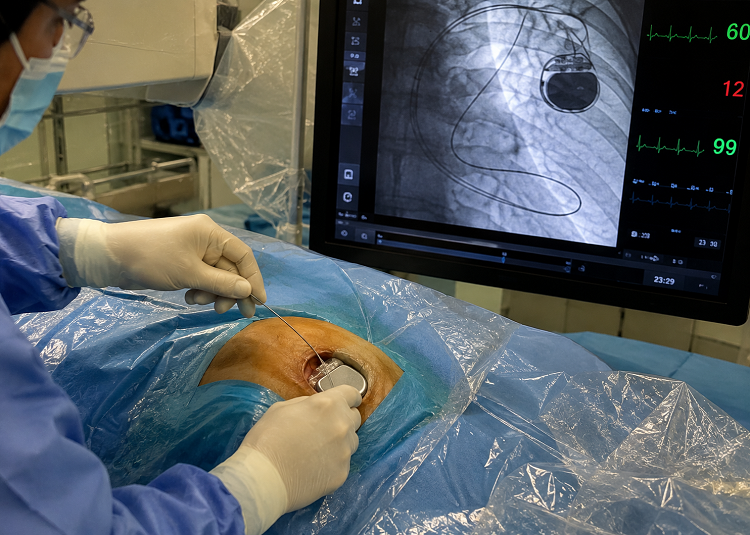
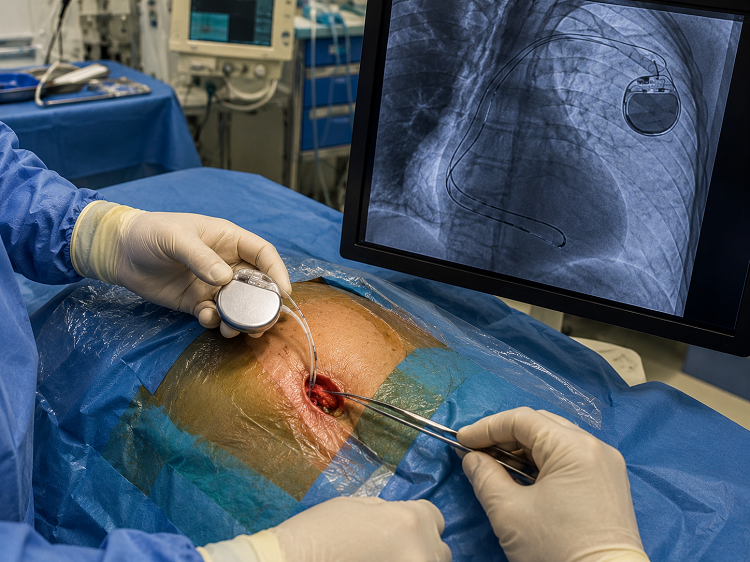
Pacemaker implantation is a procedure in which a small battery-operated medical device called a pacemaker is placed beneath the skin of the chest. The device continuously monitors the heart's rhythm and delivers gentle electrical impulses whenever the heartbeat becomes too slow or irregular.
The pacemaker is connected to the heart through one or more flexible insulated wires called pacing leads. These leads transmit electrical signals that help the heart beat at a normal and steady rate, improving circulation and reducing symptoms caused by abnormal heart rhythms.
Modern pacemakers continuously monitor your heartbeat and provide electrical stimulation only when necessary. They are designed to work naturally with your heart and respond to your daily activities.
The pacemaker contains a battery that typically lasts between 8 and 10 years depending on the device type and usage.
The impulse generator sends tiny electrical signals through pacing leads to stimulate the heart whenever needed.
The built-in computer continuously monitors your heartbeat and delivers pacing only when required.
Advanced sensors detect physical activity and automatically increase or decrease the heart rate to match your body's needs.
Your heart beats because of tiny electrical signals generated by its natural electrical system. When these signals become slow, irregular, or blocked, the heart cannot pump blood efficiently. A pacemaker continuously monitors your heartbeat and delivers gentle electrical impulses whenever needed, helping maintain a safe, regular heart rhythm and improving blood circulation.
Pacemakers are recommended for patients whose heart rhythm becomes too slow or irregular due to problems in the heart's electrical conduction system.
Bradycardia is an abnormally slow heartbeat that may cause fatigue, dizziness, fainting, breathlessness, or reduced blood flow to the brain and other organs. A pacemaker helps maintain a normal heart rate.
Heart block occurs when electrical signals are delayed or completely blocked while traveling through the heart, resulting in irregular or slow heartbeats. Pacemakers restore proper electrical conduction.
Certain patients with fast heart rhythm disorders may require pacemaker support as part of their overall rhythm management, particularly after specialized treatments.
In selected patients with serious electrical conduction disorders, pacemaker therapy helps maintain an adequate heart rhythm and supports effective pumping of blood.
If your heart beats too slowly or irregularly, you may experience symptoms that affect your daily life. Your cardiologist will perform tests to determine whether a pacemaker is the appropriate treatment.
Frequent dizziness or light-headedness caused by inadequate blood flow to the brain.
Persistent tiredness or weakness due to a slow or inefficient heartbeat.
Difficulty breathing during physical activity because the heart cannot pump enough blood.
Sudden loss of consciousness or repeated fainting due to an abnormally slow heartbeat.
Pacemaker implantation is a safe, minimally invasive procedure usually performed under local anesthesia with mild sedation. The procedure typically takes between 1 to 2 hours. A small incision is made below the collarbone, where the pacemaker is placed beneath the skin. Thin insulated wires (leads) are then guided through a vein into the heart using X-ray imaging and connected to the pacemaker.
Most patients recover quickly after pacemaker implantation and are discharged within one or two days. Your cardiologist will provide personalized instructions to ensure proper healing and long-term pacemaker function.
Most patients return home within 24–48 hours after the procedure, depending on their overall condition.
Avoid heavy lifting and excessive arm movement on the affected side for several weeks to allow proper healing.
Scheduled pacemaker checks ensure the battery, leads, and device settings continue to work properly.
Modern pacemakers provide reliable heart rhythm support, helping patients return to an active and healthier lifestyle while reducing symptoms caused by abnormal heart rhythms.
Keeps the heart beating at a safe and regular rhythm.
Increases energy levels and improves exercise tolerance.
Reduces dizziness, fainting, fatigue, and shortness of breath.
Enables many patients to safely return to their normal daily routine.
Most people with a pacemaker lead active, healthy lives. Regular follow-up appointments help ensure the device continues to work properly. Modern pacemakers are designed to automatically adjust your heart rate according to your activity level, allowing you to perform everyday tasks comfortably.
Shripad Heart Centre offers advanced Pacemaker Implantation for patients with slow or irregular heart rhythms. Under the expert care of Dr. Shripad V. Khairnar, we provide comprehensive diagnosis, modern cardiac rhythm management, minimally invasive implantation, and long-term follow-up to help patients live healthier, more active lives.