

Cardiac devices are specialised treatments used to manage certain heart rhythm and electrical problems. Depending on the patient's condition, treatment may include conventional pacemakers, leadless pacemakers, implantable cardioverter defibrillators (ICD) or cardiac resynchronisation therapy (CRT).
At Shripad Heart Centre, device therapy is planned according to the patient's heart rhythm, heart function, symptoms and overall clinical condition, with appropriate follow-up after implantation.
Senior Interventional Cardiologist providing comprehensive evaluation and advanced cardiac device therapy for selected patients.
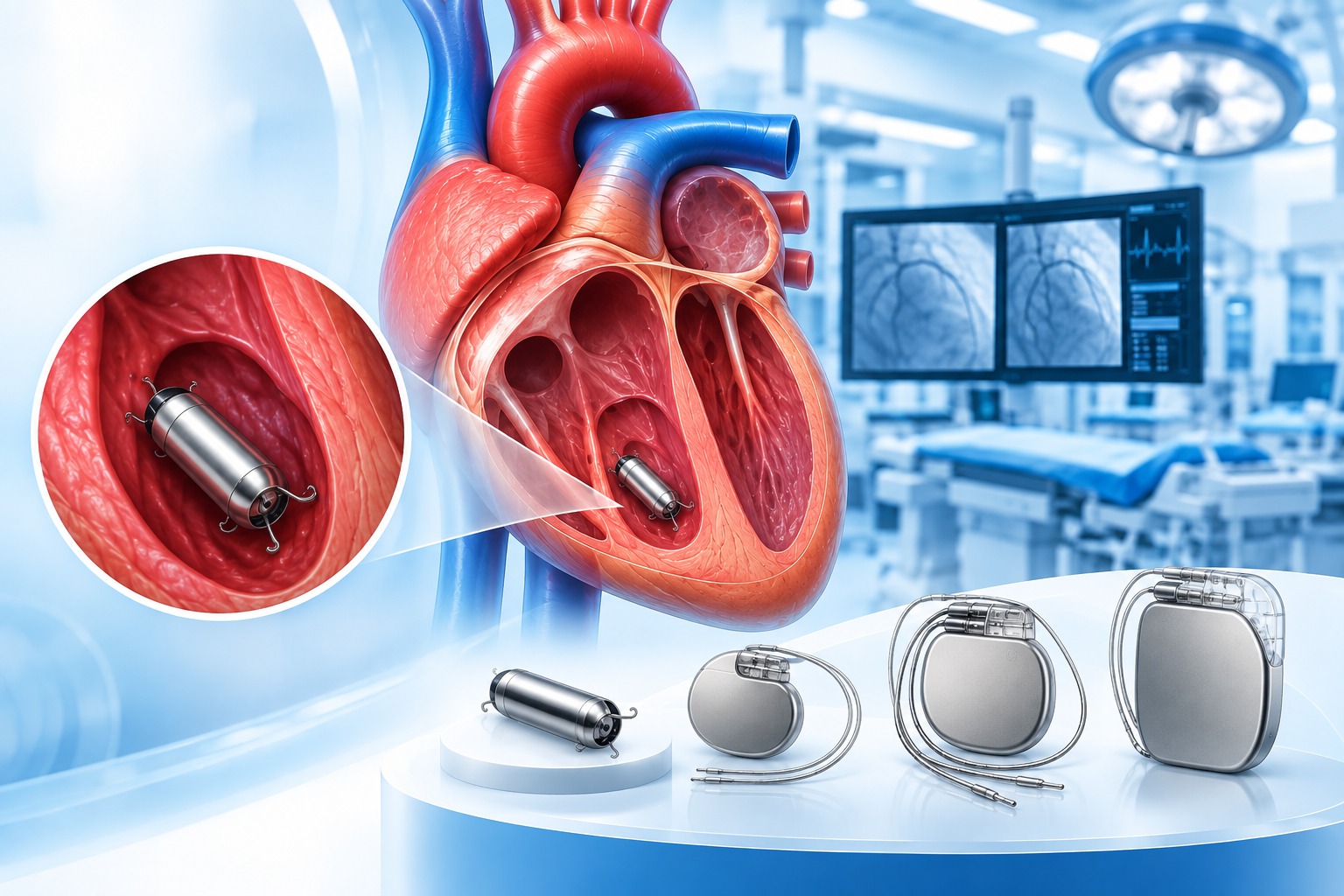

Cardiac devices are specialised medical devices used to support the heart's electrical system or help manage certain potentially serious rhythm and heart-function problems.
A pacemaker can help maintain an appropriate heart rate when the heart beats too slowly. An ICD can detect certain dangerous ventricular rhythms and provide therapy when required. CRT can help coordinate the contraction of the heart chambers in selected patients with heart failure.
The choice of device depends on the patient's diagnosis, symptoms, heart rhythm, heart function and other clinical factors.
A leadless pacemaker is a small pacemaker system designed to provide pacing without the conventional electrical leads that connect a traditional pacemaker generator to the heart.
The device is designed in a compact form and is positioned inside the heart through a catheter-based procedure in appropriately selected patients.
Unlike a conventional pacemaker, a leadless system does not require a traditional pacing lead running from a chest generator to the heart.
The device is delivered through a catheter and implanted inside the heart by an appropriately trained specialist.
Leadless pacing is not required for every patient. A cardiologist evaluates the heart rhythm, pacing requirement and overall health before deciding which pacing system is appropriate.
May be considered for selected patients who require permanent pacing because of significant bradycardia.
Particularly considered when a leadless system may offer advantages based on the patient's individual circumstances.
May be useful in selected patients where conventional transvenous lead placement presents challenges.
The final device choice is made after detailed cardiac evaluation and discussion with the patient.
Different cardiac devices are designed for different rhythm and heart-function conditions.
A conventional pacemaker uses a pulse generator and pacing leads to help maintain an appropriate heart rate in patients with certain slow or abnormal heart rhythms.
A compact pacemaker implanted inside the heart through a catheter-based approach, without the conventional chest generator and transvenous pacing lead.
An Implantable Cardioverter Defibrillator (ICD) is designed to detect certain dangerous ventricular arrhythmias and deliver therapy when required.
Cardiac Resynchronisation Therapy (CRT) is used in selected patients with heart failure and electrical conduction abnormalities to help coordinate the contraction of the heart chambers.
When a cardiac device is clinically indicated, choosing the appropriate device and ensuring regular follow-up are important parts of long-term rhythm management.
The right device for the right patient, guided by careful cardiac evaluation.
Device implantation is only one part of cardiac device care. Regular follow-up helps monitor device performance and the patient's ongoing cardiac condition.
Assessment of device function and programmed settings during appropriate follow-up visits.
Regular assessment of battery status and expected device longevity.
Ongoing assessment of symptoms, heart rhythm and relevant cardiac investigations.
Follow-up plans are tailored according to the patient's device and clinical condition.
Shripad Heart Centre provides comprehensive evaluation and cardiac device care for patients with selected heart rhythm and heart-function conditions. Dr. Shripad V. Khairnar evaluates each patient's condition carefully to determine whether a conventional pacemaker, leadless pacemaker, ICD or CRT therapy may be appropriate.