

Rotablation, also known as Rotational Atherectomy, is an advanced, minimally invasive coronary procedure used to treat severely calcified and hardened coronary artery blockages. A tiny diamond-coated rotating burr safely breaks down calcium deposits, allowing the artery to be widened and restoring healthy blood flow to the heart.
Advanced Rotablation procedures for complex coronary artery disease using modern interventional cardiology techniques for safer and more effective treatment.
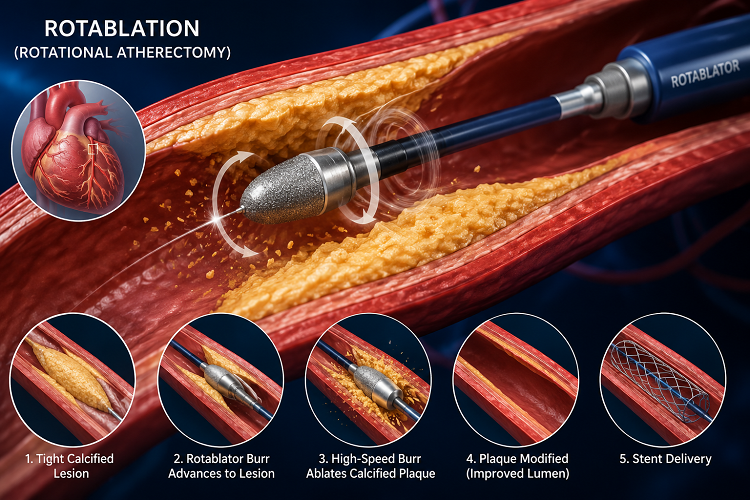
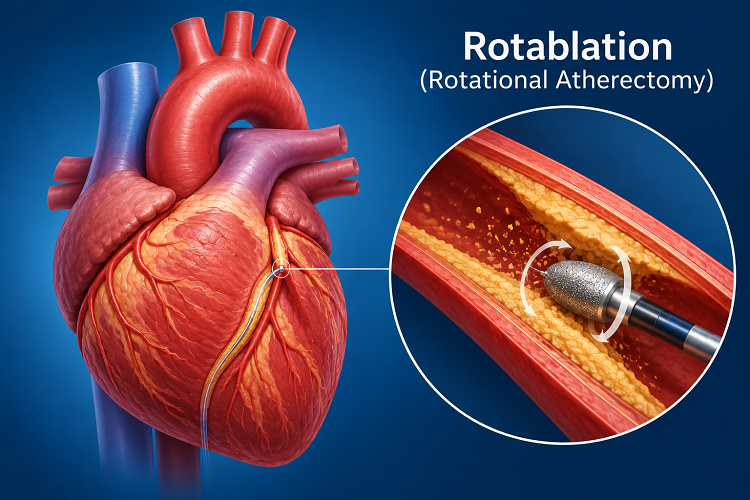
Rotablation, or Rotational Atherectomy, is a specialized coronary intervention used to treat arteries that are heavily narrowed by hard calcium deposits. A tiny diamond-coated rotating burr gently grinds the hardened plaque into microscopic particles, allowing the artery to be safely widened.
After the calcified plaque is modified, balloon angioplasty is performed and a drug-eluting stent is usually implanted to keep the artery open and restore normal blood flow to the heart.
Rotablation is recommended when coronary arteries contain severe calcium deposits that prevent conventional balloon angioplasty from expanding the artery properly.
Treats hard calcium-rich plaque that cannot be adequately opened with balloon angioplasty alone.
Restores healthy blood circulation through severely narrowed coronary arteries.
Makes it easier for balloons and drug-eluting stents to expand completely.
Used for patients with advanced coronary artery disease requiring specialized intervention.
Rotablation is primarily performed to treat severely calcified coronary artery blockages that cannot be adequately treated with conventional balloon angioplasty. By modifying hardened calcium deposits, the procedure allows successful balloon expansion and safe placement of coronary stents, restoring healthy blood flow to the heart muscle.
Rotablation is recommended for patients with heavily calcified coronary artery disease where standard angioplasty techniques are unlikely to achieve satisfactory results.
Treats narrowed coronary arteries caused by long-standing plaque and calcium deposits.
Removes extremely hard, calcified plaque that cannot be compressed with a balloon alone.
Restores blood flow to relieve chest pain caused by reduced oxygen supply to the heart.
In many patients, plaque inside the coronary artery becomes heavily calcified over time. These hard calcium deposits prevent the balloon from expanding the artery adequately, making Rotablation an essential step before angioplasty and stent placement.
Calcium buildup makes plaque extremely rigid and resistant to balloon expansion.
A tiny diamond-coated rotating burr gently modifies calcified plaque inside the artery.
After plaque modification, balloon angioplasty can fully expand the narrowed artery.
Allows drug-eluting stents to expand properly for durable, long-term treatment results.
Rotablation is performed during a cardiac catheterization procedure using a specialized device called a Rotablator. The device features a tiny diamond-coated rotating burr that gently modifies hardened calcium deposits inside the coronary artery. Once the calcified plaque is treated, balloon angioplasty and a drug-eluting stent are usually placed to restore normal blood flow and reduce the risk of future blockage.
Rotablation offers an effective solution for patients with heavily calcified coronary artery disease, improving the success of coronary interventions and long-term heart health.
Safely modifies heavily calcified plaque that cannot be treated effectively with balloon angioplasty alone.
Creates adequate space for complete balloon expansion and proper placement of drug-eluting stents.
Improves blood circulation through the coronary arteries, reducing symptoms of coronary artery disease.
Helps reduce chest pain and improves oxygen supply to the heart muscle.
Drug-eluting stents help reduce the risk of restenosis and provide durable treatment outcomes.
Provides advanced treatment for complex coronary artery disease without the need for open-heart surgery.
Shripad Heart Centre offers advanced Rotablation (Rotational Atherectomy) for patients with severely calcified coronary artery blockages. Under the expert care of Dr. Shripad V. Khairnar, we use modern interventional cardiology techniques to safely modify hardened plaque, improve stent placement, restore healthy blood flow, and deliver long-term treatment outcomes for complex coronary artery disease.