

Intravascular Lithotripsy (IVL) is an advanced calcium-modification technique used to treat heavily calcified coronary blockages. Controlled acoustic pressure waves help fracture calcium inside the coronary artery, allowing better vessel preparation and more precise stent expansion.
Senior Interventional Cardiologist providing advanced IVUS/OCT-guided assessment and calcium-modification strategies for complex and heavily calcified coronary artery disease.
Some coronary blockages are not made only of soft cholesterol plaque. Over time, calcium may accumulate within the artery wall, making the blockage hard, rigid and resistant to conventional balloon angioplasty.
If a stent is implanted without adequately treating this calcium, it may not expand properly. An underexpanded stent can increase the risk of recurrent narrowing, clot formation and future stent failure.
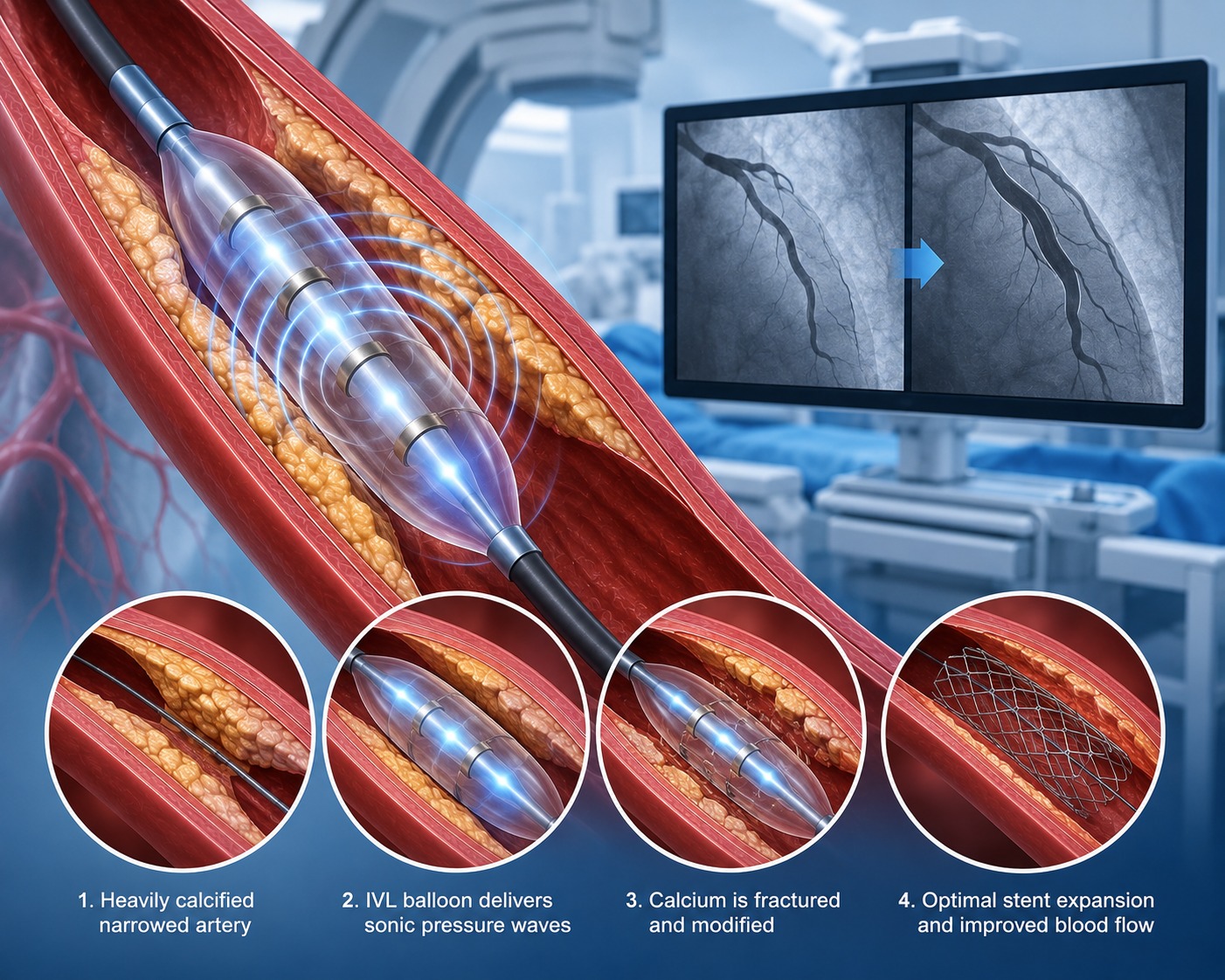
Intravascular Lithotripsy (IVL) is an advanced calcium-modification technique that uses controlled acoustic pressure waves to create fractures within coronary calcium before stent implantation.
Coronary artery disease develops when cholesterol, inflammatory tissue and calcium accumulate within the walls of the arteries supplying blood to the heart.
Severe calcium can make the artery hard and resistant to conventional balloon expansion.
Calcified lesions may be difficult to dilate and can prevent adequate vessel expansion.
Severe calcium can increase procedural complexity and make stent delivery more challenging.
Proper calcium modification can help achieve more complete and precise stent expansion.
A coronary stent is a metallic scaffold that must expand fully and attach properly to the artery wall. Severe coronary calcium can prevent optimal stent expansion.
Simply increasing balloon pressure is not always the safest or most effective solution. The calcium may need to be modified before the artery can expand properly.
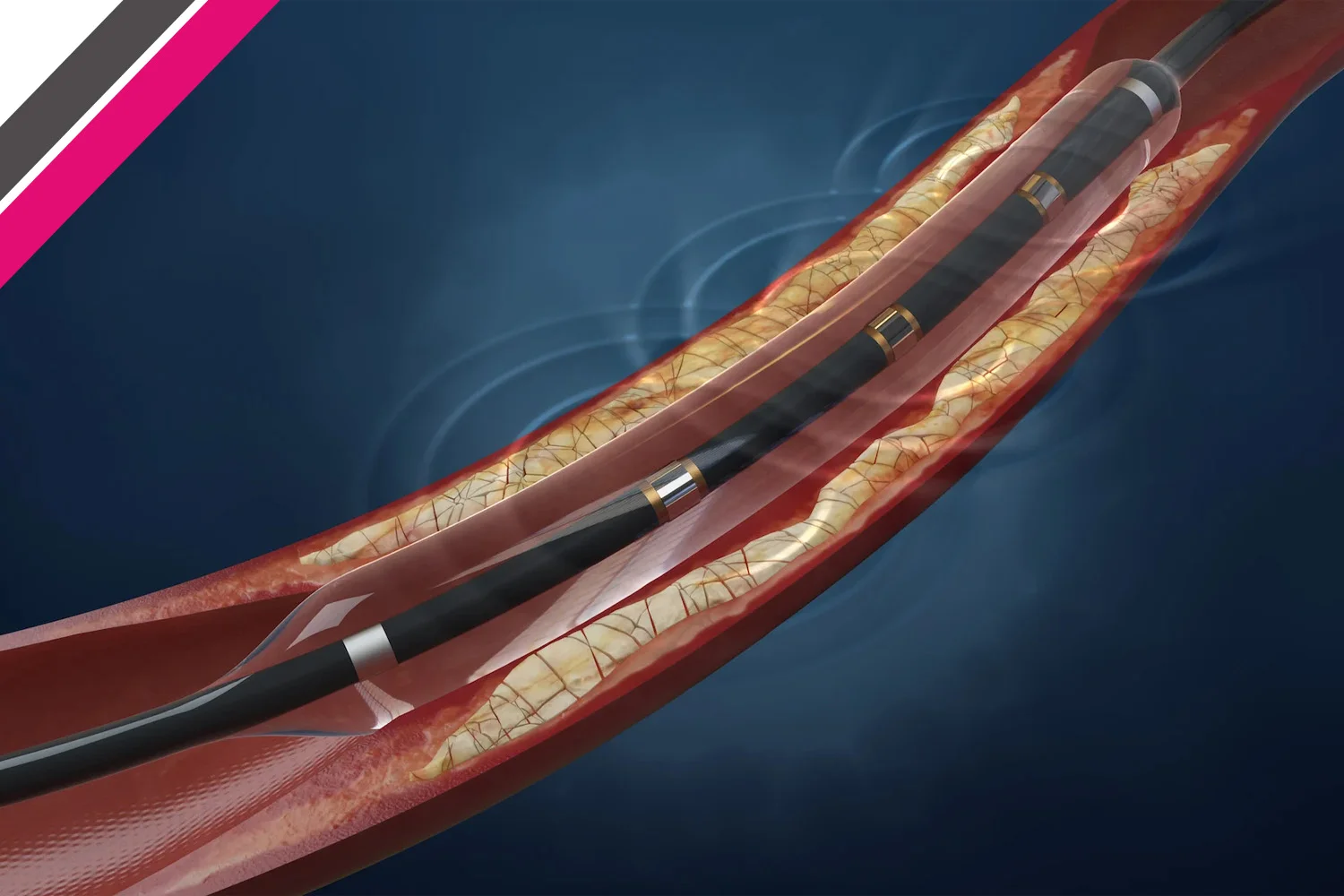
An IVL catheter contains a specialised balloon with emitters that generate controlled acoustic pressure waves to modify calcium inside the artery wall.
The specialised IVL balloon is positioned across the calcified coronary blockage.
The balloon is inflated at relatively low pressure to make contact with the artery wall.
Controlled acoustic pressure waves are delivered through the IVL balloon.
The energy creates small fractures within the hard superficial and deep calcium.
The artery becomes more compliant and easier to expand.
A coronary stent is implanted and further optimised when required.
IVL may be considered when coronary angiography and intravascular imaging demonstrate moderate or severe calcium that may prevent adequate stent expansion.
Particularly useful in selected concentric or circumferential calcified lesions.
May help modify calcium located deeper within the artery wall.
Can be considered for selected long and complex calcified coronary blockages.
May be useful in selected complex left-main interventions.
Can support careful preparation of selected calcified bifurcation lesions.
Used as part of an individualised strategy for complex coronary intervention.
Angiography may suggest the presence of calcium, but it may not accurately demonstrate its depth or circumferential extent.
Whenever feasible, intravascular imaging with IVUS or OCT can help evaluate the characteristics of coronary calcium and assist with treatment planning.
IVL angioplasty is performed in a cardiac catheterisation laboratory as part of a carefully planned coronary intervention.
The patient may undergo clinical assessment, ECG, echocardiography, kidney-function and blood tests, coronary angiography and IVUS or OCT assessment when appropriate.
The coronary artery is accessed through the wrist or groin. A guidewire crosses the blockage and the IVL balloon is advanced across the calcified segment.
Selected patients with heavily calcified coronary arteries.
Elderly or medically high-risk patients when appropriate.
Selected patients undergoing high-risk coronary intervention.
Complex left-main, bifurcation or long calcified lesions.
Acoustic energy can help modify calcium at different depths within the artery wall.
Acoustic pulses are delivered while the balloon is inflated at relatively low pressure.
Acoustic waves are distributed around the balloon and may help in concentric calcium.
Calcium modification may allow better expansion before coronary stent implantation.
Adequate lesion preparation can help optimise stent expansion and vessel wall contact.
May be useful in selected complex left-main, bifurcation and calcified coronary lesions.
IVL is used as part of a coronary angioplasty procedure and therefore shares the potential risks associated with PCI. Individual risk depends on the patient's overall medical condition and procedural complexity.
Careful case selection, intravascular imaging, appropriate device sizing and an experienced interventional team help reduce avoidable risks.
Calcified coronary disease is approached through careful assessment and individualised treatment planning rather than routine stenting.
“Do not force a stent into an unprepared calcified artery. First understand the calcium, modify it appropriately and then optimise the stent.”
Discuss IVL or another calcium-modification technique with your cardiologist if:
Not every calcified blockage requires IVL. The appropriate treatment should be selected after reviewing the angiogram, intravascular imaging, clinical condition and available alternatives.
Shripad Heart Centre provides advanced evaluation and treatment planning for complex and heavily calcified coronary artery disease. Under the care of Dr. Shripad V. Khairnar, Senior Interventional Cardiologist, patients can receive IVUS/OCT-guided coronary assessment, calcium modification strategies and precision-guided angioplasty for suitable cases.