

Device Closure is a minimally invasive catheter-based procedure used to treat certain congenital heart defects such as Atrial Septal Defect (ASD), Patent Foramen Ovale (PFO), and Patent Ductus Arteriosus (PDA). A specially designed closure device seals the abnormal opening without the need for open-heart surgery, allowing faster recovery and excellent long-term outcomes.
Experienced in advanced structural heart interventions, offering safe and effective catheter-based device closure procedures for children and adults.
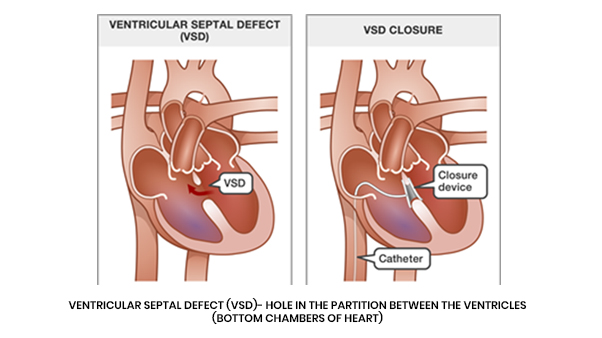
Device Closure is a non-surgical procedure used to close abnormal openings between the chambers or blood vessels of the heart. Instead of open-heart surgery, a specially designed closure device is delivered through a thin catheter inserted into a blood vessel in the groin.
Once positioned correctly, the device expands on both sides of the defect and permanently seals the opening. Over time, natural heart tissue grows over the device, making it a part of the heart structure.
Device Closure is recommended for selected congenital heart defects where catheter-based treatment provides a safe and effective alternative to surgery.
Closes an Atrial Septal Defect (ASD), an opening between the upper chambers of the heart.
Seals a Patent Foramen Ovale (PFO), reducing the risk of recurrent stroke in selected patients.
Closes a Patent Ductus Arteriosus (PDA), preventing abnormal blood flow between the aorta and pulmonary artery.
Device Closure is recommended for patients with specific congenital or structural heart defects that can be safely closed using a catheter-based approach. Your cardiologist will evaluate the size, location, and type of defect using advanced imaging techniques before recommending the procedure.
Many congenital heart defects may remain unnoticed for years, while others can cause symptoms that affect daily activities. Early diagnosis and treatment help prevent long-term complications.
Difficulty breathing during exercise or routine physical activities due to abnormal blood flow.
Feeling of rapid, irregular, or fluttering heartbeats caused by structural heart abnormalities.
Persistent tiredness and reduced exercise capacity because the heart works harder than normal.
Certain patients with PFO may experience unexplained stroke or transient ischemic attacks (TIA).
Device Closure is a minimally invasive procedure performed in a cardiac catheterization laboratory. A catheter is inserted through a blood vessel in the groin and guided to the heart under X-ray and echocardiographic guidance.
A small catheter is inserted through a vein in the groin under local anesthesia.
The catheter is carefully guided to the heart using fluoroscopy and echocardiography.
The closure device is positioned across the heart defect and opened on both sides to seal the opening.
The catheter is removed, and the device remains permanently in place while heart tissue gradually grows over it.
Different closure devices are selected depending on the type, size, and location of the heart defect.
Uses a double-disc occluder device to permanently close an Atrial Septal Defect between the upper chambers of the heart.
A specially designed occluder seals the Patent Foramen Ovale to reduce the risk of recurrent stroke.
A coil or occluder device is used to close the Patent Ductus Arteriosus without open-heart surgery.
Device Closure offers a safe, minimally invasive alternative to open-heart surgery for suitable congenital heart defects. Most patients experience faster recovery, minimal discomfort, and excellent long-term outcomes.
The defect is closed through a catheter without opening the chest, resulting in less pain and quicker healing.
Most patients are discharged within one or two days and can return to normal activities soon.
Closing the defect restores normal blood flow and reduces the workload on the heart.
Patients often experience improved energy levels, breathing, and overall well-being after treatment.
Device Closure is considered a safe and effective procedure. Serious complications are uncommon, and every patient is carefully evaluated before treatment to minimize risks.
Most complications are rare and treatable.
Every precaution is taken for a successful outcome.
Recovery after Device Closure is usually quick. Most patients resume normal daily activities within a few days while following their cardiologist's instructions regarding medications, activity, and follow-up visits.
Shripad Heart Centre provides advanced catheter-based Device Closure procedures for ASD, PFO, and PDA using modern minimally invasive techniques. Under the expert guidance of Dr. Shripad V. Khairnar, we offer accurate diagnosis, advanced structural heart interventions, and comprehensive follow-up care for the best possible outcomes.