

ICD (Implantable Cardioverter Defibrillator) and CRT (Cardiac Resynchronisation Therapy) are advanced cardiac devices used to manage life-threatening heart rhythm disorders and severe heart failure. These implantable devices continuously monitor heart activity, restore normal rhythm when required, and improve the heart's pumping efficiency, helping patients live longer and healthier lives.
Expert in advanced cardiac rhythm management, ICD implantation, CRT therapy, and comprehensive heart failure treatment.
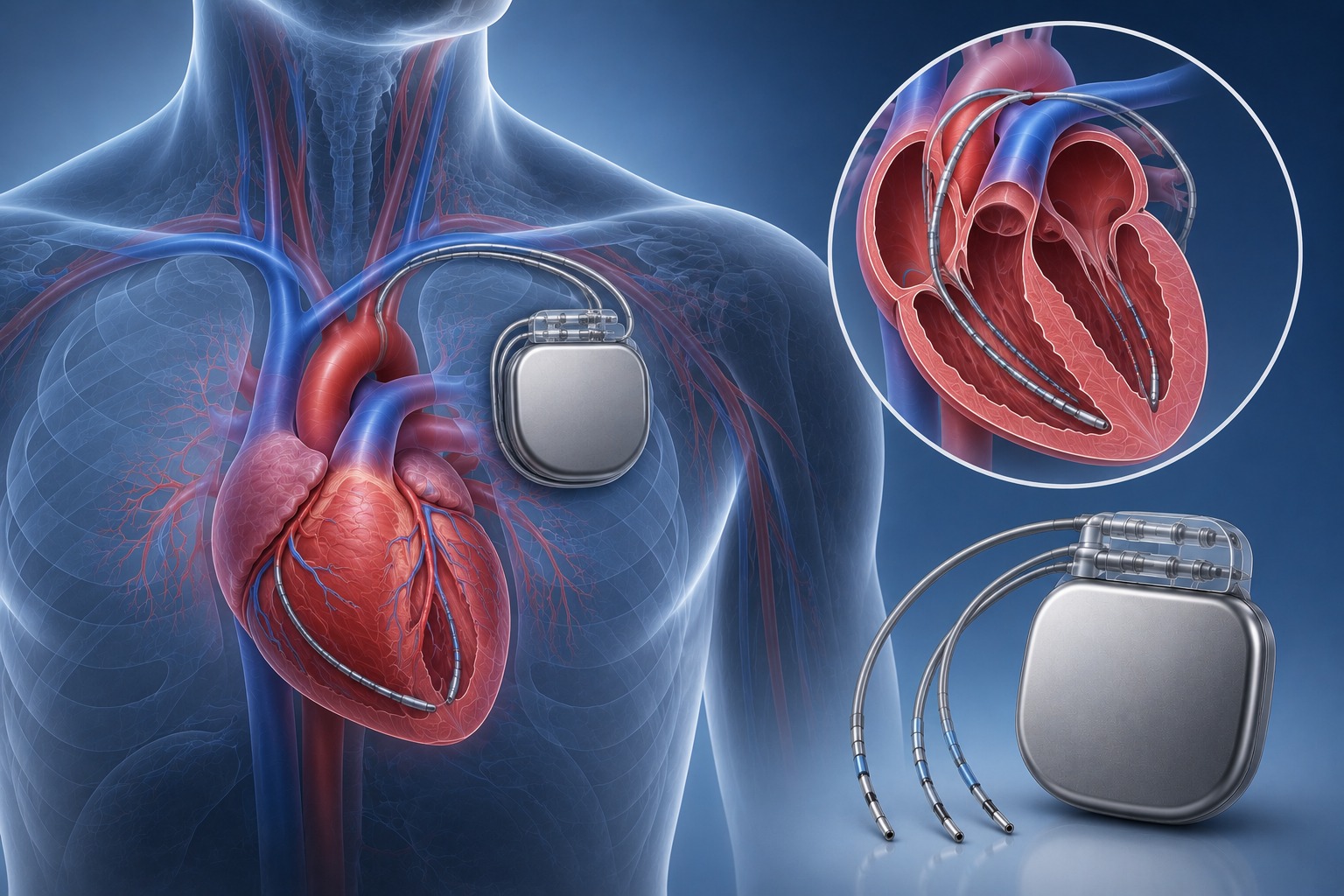
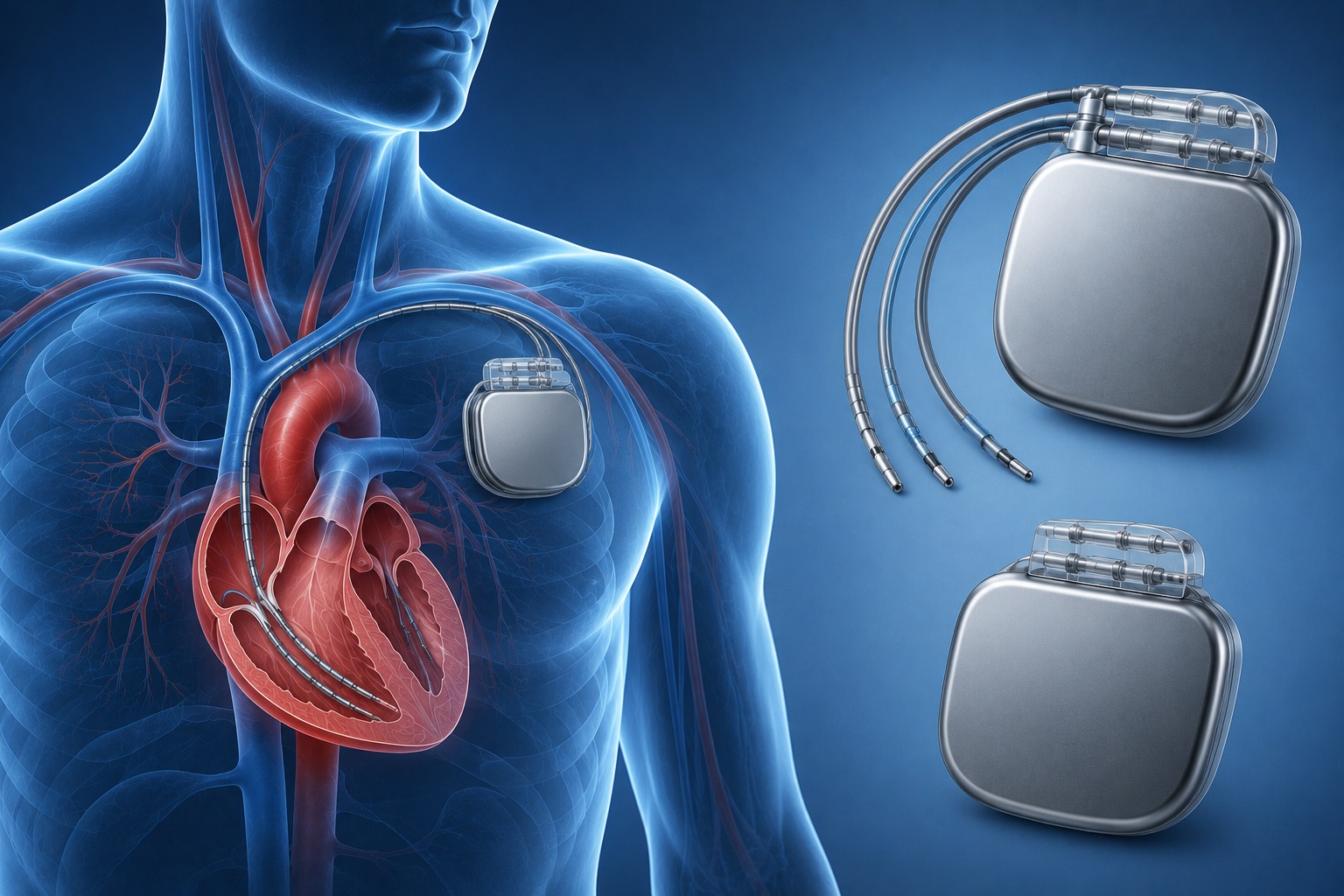
ICD (Implantable Cardioverter Defibrillator) and CRT (Cardiac Resynchronisation Therapy) are specialized implantable cardiac devices designed to treat abnormal heart rhythms and advanced heart failure. These devices are placed beneath the skin of the chest and connected to the heart through thin insulated leads.
While an ICD protects patients from dangerous fast heart rhythms and sudden cardiac arrest by delivering rapid pacing or life-saving electrical shocks, CRT improves the coordination of heart contractions by stimulating both ventricles simultaneously, allowing the heart to pump blood more efficiently.
An Implantable Cardioverter Defibrillator (ICD) is an advanced cardiac device that performs all the functions of a pacemaker while also protecting patients from life-threatening fast heart rhythms. When a dangerous rhythm is detected, the ICD can restore a normal heartbeat using rapid pacing or a controlled electrical shock.
Treats slow heart rhythms by delivering electrical impulses, just like a permanent pacemaker.
Detects dangerous ventricular arrhythmias and delivers a controlled shock to restore normal rhythm.
Monitors heart rhythm around the clock and provides therapy only when abnormal rhythms are detected.
Significantly reduces the risk of sudden cardiac death in high-risk patients.
The ICD is implanted beneath the skin in the upper chest and connected to the heart using one or more leads placed through a vein. It continuously monitors every heartbeat and instantly recognizes dangerous rhythm disturbances. Depending on the type of rhythm detected, the device automatically delivers the most appropriate treatment.
ICD implantation is recommended for patients who have a high risk of life-threatening ventricular arrhythmias or sudden cardiac arrest. The device continuously protects the heart by detecting dangerous rhythms and delivering life-saving treatment within seconds.
Patients who have survived sudden cardiac arrest are at a higher risk of future life-threatening rhythm disturbances. An ICD significantly reduces the risk of recurrence.
Patients with sustained ventricular tachycardia (VT) or ventricular fibrillation (VF) benefit from continuous rhythm monitoring and immediate treatment provided by an ICD.
Individuals with weakened heart muscles and a left ventricular ejection fraction (LVEF) of less than 35% are at increased risk of sudden cardiac death and may require an ICD.
Certain inherited heart conditions and severe structural heart diseases may also require ICD implantation based on your cardiologist's evaluation.
Depending on your heart condition, age, and treatment goals, your cardiologist may recommend either a conventional ICD or a Subcutaneous ICD (S-ICD).
The conventional ICD is implanted beneath the skin with one or more leads passed through a vein into the heart. It provides pacing for slow heart rhythms and delivers rapid pacing or electrical shocks for dangerous fast rhythms.
The Subcutaneous ICD places the lead beneath the skin along the breastbone instead of inside the heart. It protects against sudden cardiac arrest without passing leads through the veins, making it an excellent option for selected patients, especially younger individuals.
Cardiac Resynchronisation Therapy (CRT) is an advanced pacing treatment for patients with heart failure and abnormal electrical conduction of the heart, particularly those with Left Bundle Branch Block (LBBB). Unlike a standard pacemaker, CRT uses an additional lead placed on the left side of the heart, allowing both ventricles to contract together and improving the heart's pumping efficiency.
CRT is recommended for carefully selected patients with heart failure who continue to have symptoms despite optimal medical treatment.
Patients with moderate to severe heart failure symptoms.
Individuals with significantly reduced left ventricular ejection fraction.
Patients with LBBB causing delayed electrical activation of the heart.
Restores coordinated contraction of both ventricles for improved heart function.
ICD and CRT implantation are minimally invasive procedures performed in a specialized cardiac catheterization laboratory or electrophysiology suite. The procedure is usually carried out under local anesthesia with mild sedation. A small incision is made below the collarbone, and one or more leads are guided through a vein into the heart using X-ray imaging. These leads are connected to the implanted device, which is carefully tested before the incision is closed.
ICD and CRT therapies provide long-term protection against serious heart rhythm disorders while improving heart function and quality of life in appropriately selected patients.
ICD therapy detects and treats life-threatening ventricular arrhythmias within seconds.
CRT restores synchronized contraction of both ventricles, allowing the heart to pump blood more efficiently.
Helps decrease breathlessness, fatigue, and exercise intolerance in eligible heart failure patients.
Many patients experience improved daily activity, reduced hospitalizations, and better long-term outcomes.
ICD and CRT implantation procedures are generally safe. However, like any cardiac procedure, there are some potential risks. Your cardiologist will carefully evaluate your condition and take every precaution to minimize complications.
Most complications are rare and manageable.
Similar to ICD implantation with a few additional considerations.
Modern ICD systems support remote home monitoring, allowing important information about your heart rhythm and device performance to be securely transmitted to your cardiologist. Regular follow-up visits help ensure the device continues to function correctly and that programming adjustments are made if required.
Shripad Heart Centre provides advanced ICD and Cardiac Resynchronisation Therapy (CRT) for patients with life-threatening heart rhythm disorders and heart failure. Under the expert care of Dr. Shripad V. Khairnar, we offer comprehensive evaluation, advanced device implantation, remote monitoring, and long-term follow-up to help patients achieve better heart health and improved quality of life.